
Two-Tone Kitchen Cabinets: 5 Color Pairings and Placement Ideas
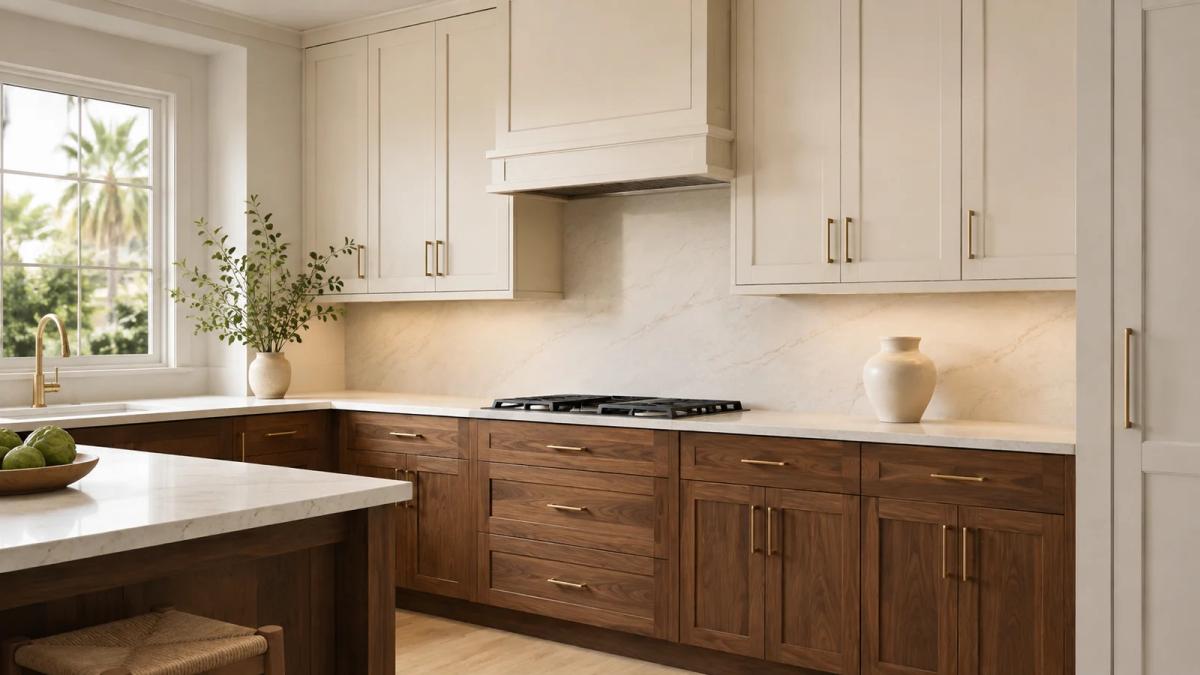
Two-tone kitchen cabinets use two cabinet colors or finishes in the same room. You can divide them between upper and lower cabinets, give the island a separate finish, or highlight one complete cabinet wall. The right combination starts with the surfaces you are keeping, the light in your kitchen and the amount of contrast you enjoy.
A second finish can bring warmth to white cabinetry or give a favorite color a place in the room. These ideas will help you move from saved inspiration photos to a palette you can actually choose.
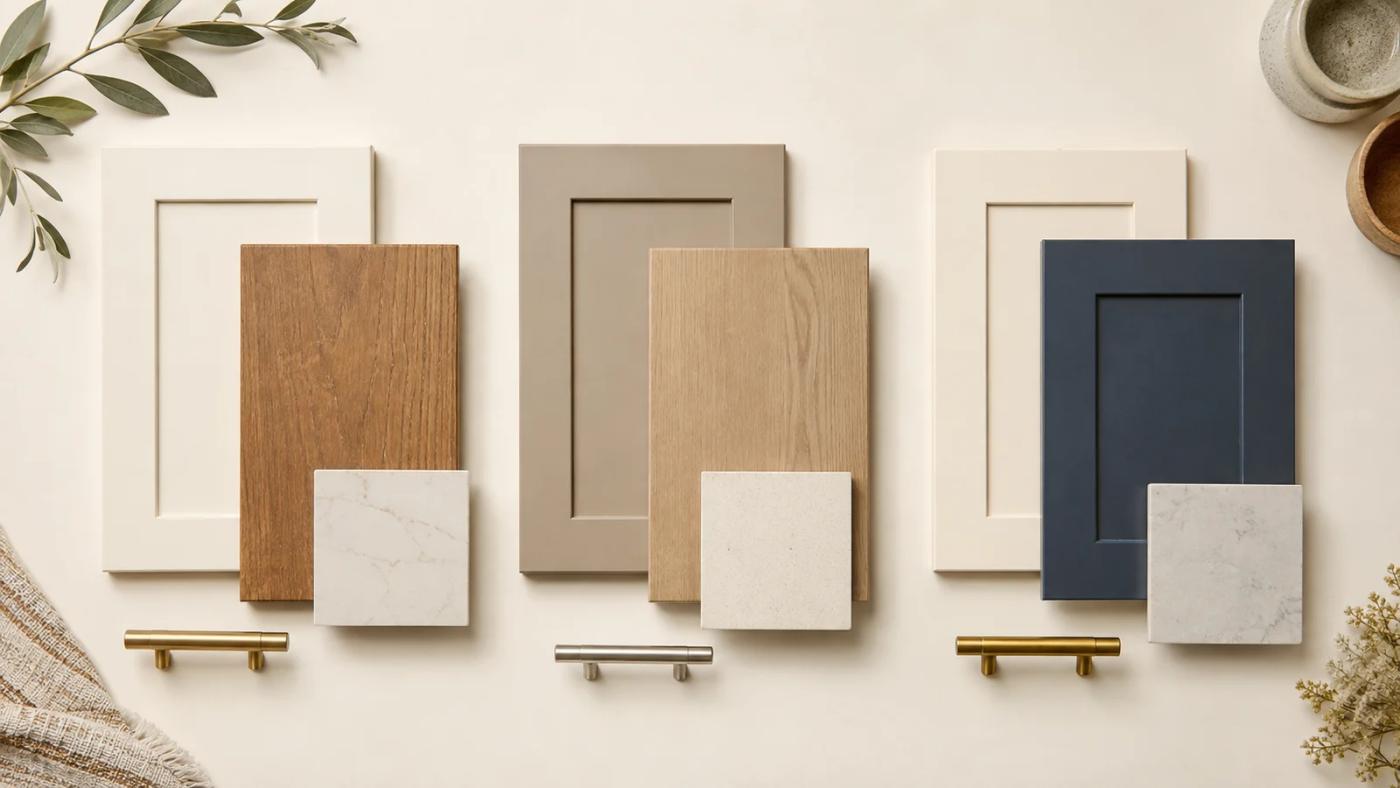
| Pairing | A placement to test | Check before choosing |
|---|---|---|
| Warm white + wood | White perimeter, wood island; or white uppers, wood lowers | Cabinet grain beside the flooring |
| Taupe + wood | Taupe uppers with wood lowers | Pink, gray or yellow undertones |
| Ivory + navy | Navy lowers or island with lighter surroundings | How dark the blue looks away from daylight |
| Soft white + green | Green lowers or one complete cabinet wall | Green beside the backsplash and fixed finishes |
| Black + wood | One complete black cabinet group, one wood group | Reflections, visible marks and the amount of contrast |
Choose Where Each Cabinet Finish Will Go
Decide on the color arrangement before selecting individual shades. Mark the cabinet groups on a simple drawing so every visible surface has a place.
- Upper and lower cabinets: One finish runs above the counter and another below. Lighter uppers are a useful starting point when you want less visual weight around the room, but dark uppers can also work. Test the complete view.
- Island and perimeter: Keep the wall cabinets consistent and give the island its own finish. Include its back, end panels and toe kick in that decision; those surfaces may face your living room.
- A complete cabinet wall: Use one finish for a pantry or refrigerator wall and another for the remaining cabinetry. Carry the chosen finish through the full height instead of creating an awkward change halfway up a tall cabinet.
These arrangements also appear in KraftMaid's two-tone cabinet guidance. Two-tone can mean two painted colors, paint paired with a wood finish, or two different stained finishes. An island is optional.
Five Two-Tone Cabinet Pairings to Consider
Warm White and Medium Wood Grain
This is a good direction if you want contrast within a warm, restrained palette. Smooth white doors and wood-grain fronts create a difference in both color and pattern. Hold the samples beside your flooring: the cabinet grain does not have to match the floor, but the two should look chosen together. Include visible wood furniture in the adjoining room when reviewing the combination.
Soft Taupe and Light Wood
Consider this pairing when you like an understated kitchen with visible grain. Hold the taupe sample beside the wood finish: a pink or purple cast you barely noticed alone may become more apparent next to brown. Compare lighter and deeper wood samples before choosing the contrast. Our St. Petersburg project below takes a related approach, pairing taupe uppers with deeper wood-grain lowers.
Ivory and Navy or Deep Muted Blue
Deep blue can define an island or a run of lower cabinets while ivory keeps the surrounding cabinetry visually simple. Check the blue in the darkest part of the kitchen, where it may read almost black. Compare ivory against the counter sample, too; a warmer cabinet door may look more yellow beside a bright white surface. Choose that contrast deliberately, or adjust one sample.
Soft White and Green
Try a muted green on lower cabinets if you want color along the base of the room. A deeper green on a full-height cabinet wall creates a stronger focal point. Review it next to the existing floor and backsplash: the same green can look cool beside one surface and earthy beside another. Keep a physical sample in the room before choosing the final shade.
Black and Wood Grain
This pairing creates a stronger contrast in both color and texture. Try black on a complete cabinet group rather than alternating individual doors. Let the wood grain remain visible on the other group. Compare the black finish from different angles and ask for its care instructions; a showroom sample may look different under bright side lighting at home.
Check the Cabinet Details Behind the Colors
Two finishes that look good together still need to work as cabinet products. Ask whether both are available in the door profile and cabinet sizes your layout requires. Compare drawer fronts, door edges and visible end panels, particularly if the finishes come from different collections.
For a wood-grain selection, review the direction and appearance of the grain on both doors and drawers. Ask how it will continue across wider panels. A small sample cannot show the entire arrangement.
Also distinguish the finish's appearance from its material. “Wood grain” describes a look; it does not establish whether a particular cabinet is solid wood, veneer or another surface. Confirm construction, finish specifications and care instructions for the actual products being quoted.
Bring Countertops, Backsplash and Hardware Into the Same Decision
Start with anything that must stay. Existing flooring, a retained countertop or a prominent appliance belongs in your sample group from the beginning.
Hold cabinet samples upright, place the counter sample horizontally and set the backsplash behind it. This recreates how the finishes meet. Check whether a vein, grout color or cabinet undertone pulls your attention away from the overall combination.
Try the same handle against both doors before choosing it. A finish can be obvious on one cabinet and nearly disappear on the other. Keeping a consistent handle shape across both colors is one straightforward way to connect them, even when drawers need different handle lengths.
Compare porcelain and quartz countertop options and kitchen backsplash ideas with both cabinet finishes, not just the lighter one.
A Real Two-Tone Kitchen in St. Petersburg
TGA's Two-Tone Kitchen Remodel in St. Petersburg combines wood-grain lower cabinets with smooth taupe uppers. Flat cabinet fronts keep the door shapes consistent while the finishes provide the contrast.
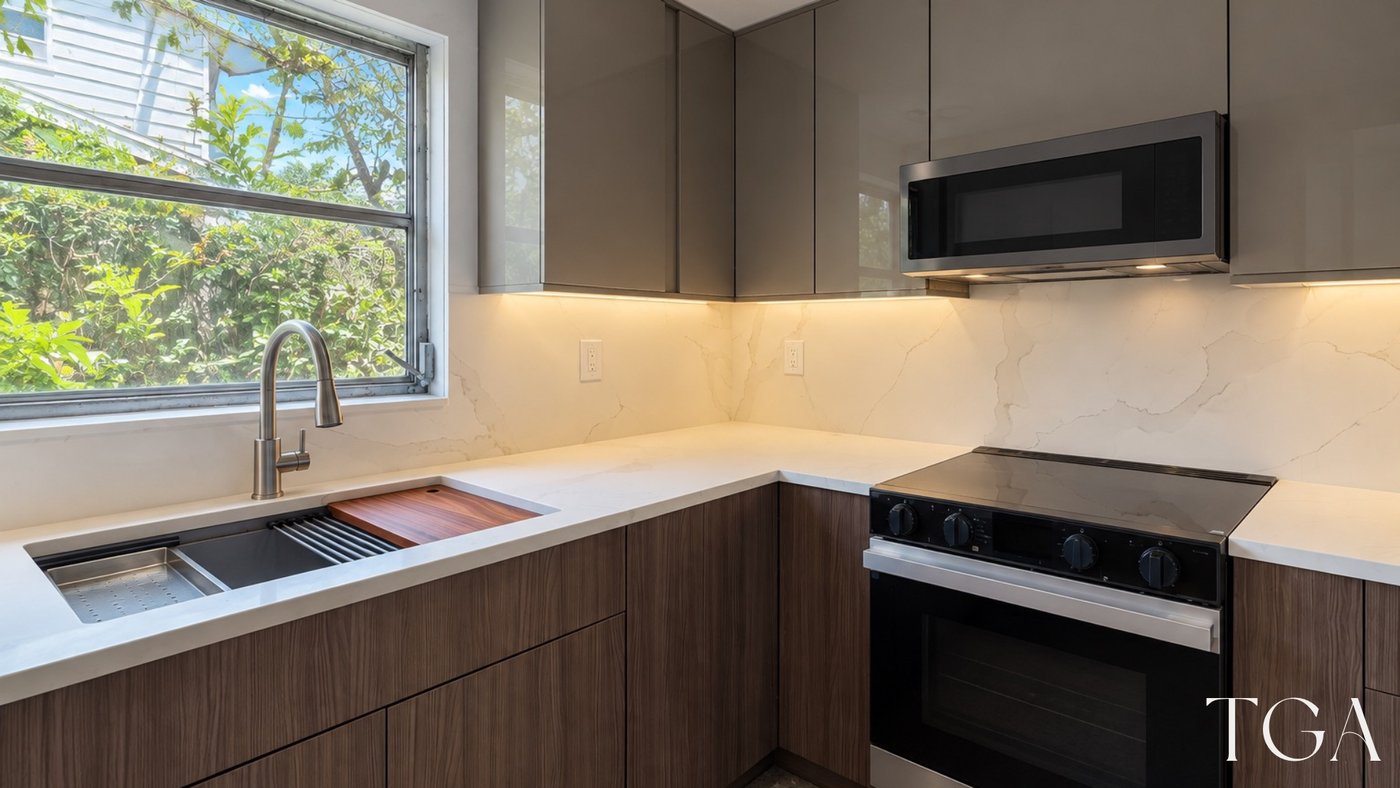
Light veined countertops and backsplash continue around the corner between the sink and cooking areas. The wood grain sits below that continuous light surface, while the taupe cabinetry carries across the wall above. Warm under-cabinet lighting makes the backsplash another visible part of the palette.
This project offers a useful idea for a kitchen without an island: the upper-and-lower arrangement creates a clear color plan across adjoining walls. The finishes do not need to alternate from cabinet to cabinet to make an impression.
Test Your Favorites Before You Order
Narrow the choice to two complete combinations and compare them under the same conditions:
- Bring actual finish samples home. A screen image is useful for ideas, but it should not be the final color reference.
- Check morning and evening. Review both combinations with daylight, overhead lights and the task lighting you expect to use.
- Move the samples. View them beside the window, beneath upper cabinets and from the adjoining room.
- Inspect the sheen and texture. Look from an angle as well as straight on. Compare reflections and visible marks, and ask how each finish should be cleaned.
- Record the full selection. List the finish for doors, exposed panels, trim and toe kicks, along with counters, backsplash and hardware. Resolve any undecided surfaces before ordering.
Common Questions About Two-Tone Cabinets
Do the Lower Cabinets Have to Be Darker?
No. Darker lowers and lighter uppers are one arrangement. You can reverse it or keep all perimeter cabinets alike and use the second finish on the island. Review the entire elevation, including tall cabinets, before deciding.
Can I Keep Some Existing Cabinets?
Possibly. Their condition, layout, door style and available finish options determine whether retaining them makes sense. Have the existing cabinetry assessed before buying new doors or selecting a second cabinet collection around it.
Will Two-Tone Cabinets Make a Small Kitchen Bigger?
They change the appearance, not the usable space. A lighter upper finish may feel less prominent against a light wall. The layout, storage and appliance clearances still need their own planning.
For a compact room, start with our small kitchen layout guide, then assign finishes to the cabinet groups that fit.
Do Two-Tone Cabinets Cost More?
They can, but the colors alone do not determine the price. Ask whether the second finish carries an upcharge, changes product availability or requires different panels and trim. Compare the complete cabinet order with a one-finish version of the same layout.
Are Two-Tone Cabinets a Passing Trend?
No finish choice comes with a promise of lasting popularity. Choose a combination you enjoy with the home's fixed surfaces. Consistent door profiles, considered color placement and complete end-panel selections are more useful decisions than chasing a particular year's trend.
Plan Your Kitchen With TGA
For a Tampa Bay project, bring your favorite combinations and a list of what you want to keep to your TGA home visit. We start with a free TGA 5-Star Estimate based on measurements and your needs. After you approve the proposal, we move into design and material selections. Once those are signed off, construction begins, with the layout and finish decisions made together.