

Siding Replacement in Tampa, FL: What Survives Salt, Sun, and Storm Season
A popular choice for homeowners looking for the perfect balance of low maintenance and gorgeous, lasting durability.
Free Siding Quote
*Offer Expires 10/31/26
Start with an in-home visit and a detailed TGA 5-Star Estimate.

Award Winning Company
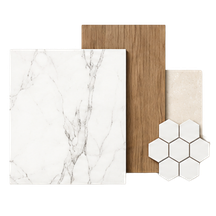
Detailed Material Selections
In-House Interior Designers

Kitchen & Bath Showroom
Our Process Build Around You
Open any project photo
Tampa kills siding faster than almost anywhere in the country. Extreme summer UV, sideways rain, salt air off the bay, and 140-to-150-mph design winds all attack your walls. Cladding that lasts 40 years in Ohio can fail here in 15.
Here's the short version. For most Tampa homes in 2026, we recommend James Hardie fiber cement, which runs $15,000 to $30,000 installed. Vinyl costs less, usually $9,000 to $16,000, and still makes sense for certain houses and budgets. We'll show you where each one wins.
We're TGA Kitchens & Remodeling, and we're relaunching siding as a core exterior service across Tampa Bay. You work with one licensed team from design through permits through the final bead of caulk. And you see your home in a photorealistic 3D rendering, new color, new trim, new gables, before anything gets ordered.
Below, we cover how each material performs in our climate, real 2026 pricing, and Tampa's permit rules. We also cover the moisture warning signs worth checking this week, and what installation actually looks like.
Fiber Cement vs. Vinyl When Your Walls Face the Gulf
Fiber cement wins on lifespan, wind resistance, and fire rating. Vinyl wins on upfront price. In Tampa, four specific threats decide which one belongs on your house.
The four things Tampa does to siding
Sun. Our UV index sits at extreme levels from late spring into September. Vinyl pigment fades, and dark panels can look chalky within a decade. James Hardie's ColorPlus finish is baked on at the factory and engineered to resist fading, chipping, and cracking.
Heat and salt. Vinyl can distort in Florida heat, especially where low-E windows reflect concentrated sun onto a nearby wall. Salt air near the bay corrodes cheap fasteners and dulls finishes fast. Fiber cement doesn't melt, warp, or feed termites, and we hang it with corrosion-resistant fasteners.
Water. Tampa averages roughly 46 inches of rain a year, much of it wind-driven. Vinyl itself won't rot, but water slips behind cracked panels and quietly rots the sheathing. Fiber cement over a proper water-resistive barrier, with flashed joints, resists moisture for decades.
Wind. Our ultimate design wind speeds run 140 to 150 mph under the Florida Building Code. Thin vinyl cracks under wind-borne debris. Fiber cement is tested against cyclic wind pressure and carries state product approvals, more on those below.
The James Hardie lineup we quote
Everything we install here is HZ10, Hardie's formulation for climate zones 6 through 10. The company engineered it for hurricane-force winds, coastal salt air, and humid southern heat, which is just a Tampa forecast. The line covers HardiePlank lap siding, HardiePanel for board-and-batten looks, HardieShingle for gables, plus matching HardieTrim and HardieSoffit.
Color comes three ways. Primed boards, painted on site in any color. The Statement Collection, regionally stocked ColorPlus colors with the shortest lead times. Or the Dream Collection, hundreds of made-to-order ColorPlus colors that add weeks to delivery. The siding carries a 30-year, non-prorated, transferable warranty; the ColorPlus finish carries its own 15-year warranty.
When we'd still say vinyl
Vinyl earns its place on tight budgets, rentals, and detached structures. If you go vinyl in Tampa, go thick, .044-inch panels or heavier, and pick lighter colors that fade less. Insulated vinyl adds rigidity and a small efficiency bump for roughly $2 to $4 more per square foot. What we won't quote: untreated wood siding, which Tampa's termites and humidity punish, or thin builder-grade vinyl that storm debris shreds.
Seven Warning Signs Tampa Siding Is Hiding Moisture Damage
Moisture damage starts invisible. By the time boards visibly rot, water has usually been inside the wall for years. Walk your exterior after each storm season and look for these seven tells.
One: bubbling or peeling paint. Moisture inside the board pushes finish off from behind. Two: soft spots. Press near butt joints and bottom edges, solid siding doesn't give under a thumb. Three: swollen board edges. Old hardboard "mushrooms" along its bottom lip as it absorbs water, and plenty of 1980s and '90s Tampa subdivisions still wear original hardboard.
Four: stains that return. Green or black streaks that reappear weeks after pressure washing signal trapped moisture, not surface dirt. Five: wavy panels. Vinyl that ripples was nailed too tight, or it's telegraphing warped sheathing underneath. Six: interior clues. Stained drywall below windows and musty closets on exterior walls usually mean failed flashing.
Seven: cooling bills that creep up. Wet wall insulation loses R-value, and your AC pays the difference every month from June through September.
A Tampa-specific tip: check the wall your sprinklers hit and the wall that takes afternoon sun. Irrigation overspray and west-facing UV are the two fastest siding killers here, and those walls usually fail first.
One or two of these might mean a repair. Three or more usually means water has reached the sheathing, and replacement becomes the cheaper long-term call. We'll tell you honestly which situation you have, we probe the wall with a moisture meter before quoting anything.
What Siding Replacement Costs in Tampa in 2026
In 2026, installed vinyl runs $4 to $8 per square foot in Tampa Bay. Insulated vinyl runs $8 to $12. James Hardie fiber cement lands between $8 and $13, depending on profile and finish. National data shows the same shape: fiber cement averages $6 to $13 per square foot installed, and Tampa labor sits mid-curve.
For a typical one-story Tampa home with 1,500 to 2,000 square feet of wall area, vinyl totals roughly $9,000 to $16,000. The same house in Hardie lands between $15,000 and $30,000. A large two-story with hidden rot can pass $35,000.
What moves your number
Rot repair is the biggest variable. Nobody knows how much sheathing needs replacing until tear-off, but budget $1,500 to $5,000 if you've spotted the warning signs above. Second stories add staging and time. ColorPlus costs more than primed-and-painted upfront but skips the five-to-eight-year Tampa repaint cycle. Permit fees, dumpster, and disposal add several hundred dollars more.
One Tampa-specific saver: many local homes are concrete block with frame gables. If that's yours, you may only need siding on gables, soffits, and additions. That can be a $4,000 to $8,000 project instead of a $20,000 one.
We quote from measured wall area after the moisture check, a fixed scope with line items you can read. If a bid comes in far below these ranges, ask what's missing. It's usually the water-resistive barrier, the flashing, or the permit.
Permits, Wind Code, and HOA Sign-Off for Tampa Siding
Your replacement almost certainly needs a permit. The City of Tampa exempts siding work under 500 square feet, and a full house blows past that threshold. City permits run through the Accela Citizen Access portal; Construction Services answers questions at (813) 274-3100.
In unincorporated Hillsborough, Carrollwood, Town 'N Country, Citrus Park, applications go through the county's HillsGovHub portal instead. Either way, we hold Florida Certified Building Contractor license CBC1268077, so we pull the permit and schedule every inspection. You never touch a portal.
Skipping the permit isn't a shortcut worth taking. Unpermitted exterior work surfaces during home inspections and insurance photo reviews, usually at the worst possible moment, closing week.
What the wind code actually requires
The Florida Building Code, 8th Edition (2023), governs your project. Tampa Bay's ultimate design wind speeds run 140 to 150 mph, and areas near the bay sit inside a wind-borne debris region. For siding, that translates into two requirements.
First, the product needs a current Florida Product Approval, HardiePlank lap siding carries FL#13192. Second, the fastening schedule must match your home's design pressure. Fastener type, spacing, and penetration depth all change with wind exposure. Inspectors check it, and it's the first thing a cut-rate crew shortcuts.
One thing the debris rules don't require: impact-rated siding. That testing burden falls mainly on windows and doors. Your cladding just has to hold on at pressure, which is an installation question as much as a product one.
HOA approval comes first
In deed-restricted communities, the architectural review board approves color and profile before any permit gets submitted. We build that packet for you: Statement Collection swatches, product specs, and your 3D rendering. A photorealistic image of your actual house gets approved faster than a paint chip.
From 3D Rendering to Final Inspection: Your Timeline
Most Tampa siding replacements run four to eight weeks door to door, with one to two weeks of crew time on site. Here's the sequence.
Weeks one and two: measure and design. We measure wall area, probe suspect boards with a moisture meter, and photograph every flashing detail. Then we model your exterior in 3D so you're comparing colors and profiles on your actual house, not a stock photo.
Weeks two through four: approvals and ordering. HOA submittal first if you have one, then the permit application. Straightforward residential siding permits usually clear in days to a couple of weeks. We order early, Statement Collection colors ship from regional stock, while Dream Collection orders add lead time.
Weeks four through six: tear-off and dry-in. We strip old cladding to the sheathing, replace anything soft, then install fresh water-resistive barrier and flashing. This stage separates a 30-year job from a 10-year one. It's also why we never side over existing material.
Weeks five through seven: install and close out. Boards go up on the wind-zone fastening schedule, joints get flashed, and trim and caulk seal the envelope. Primed jobs get painted. Then the final inspection closes your permit, and we register your warranty.
You can live at home the whole time. Expect nail-gun noise during working hours, protected landscaping, and a magnet-swept yard every evening. Most crews are gone within two weeks.
Tampa Siding Questions We Hear Every Week
Do I need a permit to replace siding in Tampa?
Yes, when the work covers more than 500 square feet, and a full replacement always does. Small patch repairs under that threshold are exempt inside city limits. Either way, we handle every step of the paperwork.
Can you install new siding over my old siding?
No, and you shouldn't want that. Manufacturer instructions call for installation over a water-resistive barrier on solid sheathing. Tear-off is also the only way to find hidden rot while it's still cheap to fix.
How long does James Hardie last in Florida?
The boards carry a 30-year, non-prorated warranty, and well-installed fiber cement routinely outlasts it. The ColorPlus finish is warrantied for 15 years. Compare that with repainting site-painted wood every five to eight years under Tampa sun.
Will new siding lower my insurance premium?
Usually not directly, and we won't pretend otherwise. Florida's wind-mitigation credits reward roof features and opening protection, not wall cladding. But insurers photograph exteriors, and visible rot can complicate a renewal. Sound siding takes that risk off the table.
What's the best season for siding work in Tampa?
Dry season, roughly November through April, gives us the most uninterrupted install days. We work summers too. We just build storm buffers into the schedule and dry-in every opened section the same day.
My house is concrete block. Does any of this apply?
Probably, yes. Most block homes still have frame gables, soffits, and fascia, the parts that rot first. Many also carry additions or second stories wearing tired 1980s hardboard. We'll scope only what your house actually needs.
See Your New Exterior Before We Order the First Board
Every siding project we take on starts with a photorealistic 3D rendering of your home in its new skin. You approve the exact look, plank width, trim color, gable treatment, before we order a single board. No guessing from a two-inch sample chip.
Start at our Design Center: TGA Kitchens & Remodeling, 4940 66th St N, St. Petersburg, FL 33709. It's about half an hour from downtown Tampa. You can hold HardiePlank samples in your hands and compare ColorPlus colors in natural light.
Call (727) 800-4050 for a free exterior assessment anywhere in Tampa, Hillsborough County, or Pinellas. We'll probe for moisture, measure your walls, and price both vinyl and fiber cement, fixed scope, no pressure. We hold a 4.9-star rating across 110+ Google reviews, and we'd like to earn yours next.

Project Credentials
Certifications
TGA Kitchens & Remodeling is licensed and insured for residential remodeling work, with local project coordination and clear accountability from estimate through completion.


Verified Across
Eight Trusted Sources








250+ Verified Homeowners
Free Siding Estimate
Safety • Comfort • Accessibility
Siding Quick Facts



Siding We Install


Let's Get You A Free Quote on Your Fiber Cement Siding Installation
Contact us to receive a free estimate for your fiber cement siding installation project!