
Cabinet Refacing vs. Replacement in Tampa Bay
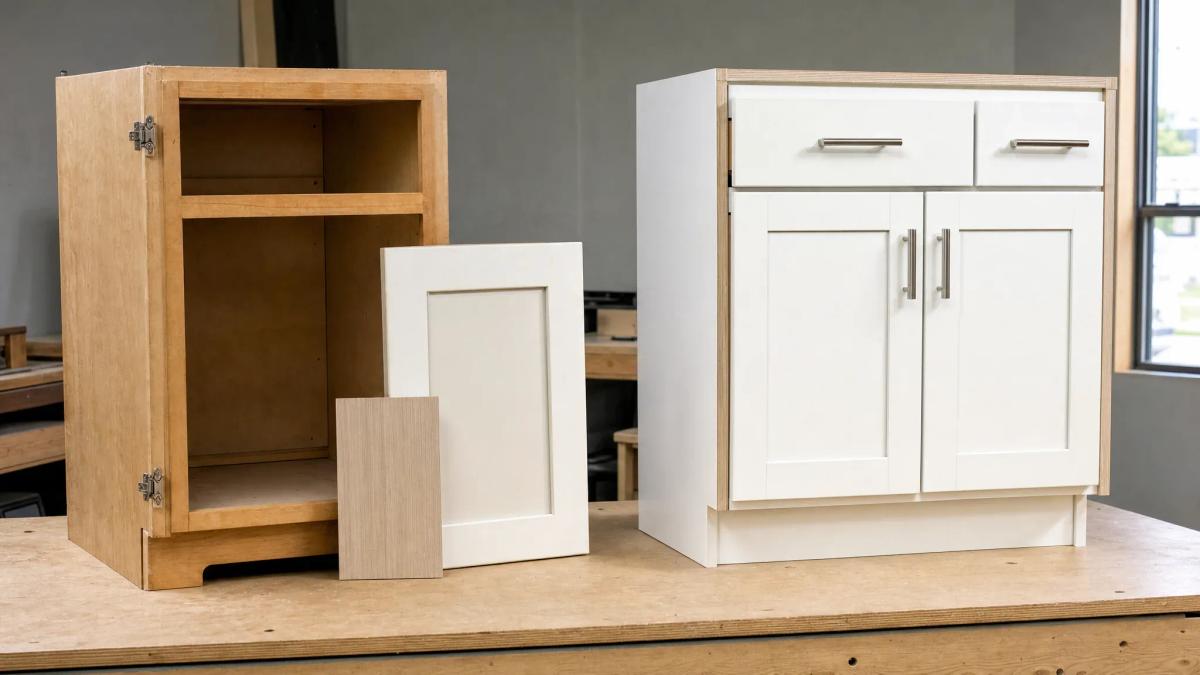
Cabinet refacing keeps the existing cabinet boxes and changes the visible exterior. Cabinet replacement removes the boxes and installs a new cabinet system. The better choice is not determined by appearance alone. It depends on the condition of the boxes, whether the current layout works, which modifications are needed, and what each quote actually includes.
Important service disclosure: TGA Kitchens & Remodeling does not offer cabinet refacing. In TGA's typical full-scope kitchen projects, the price of refacing can approach replacement after refacing labor, new doors, hardware, cabinet modifications, and related work are included. Because TGA designs and builds full kitchen remodels, we generally prefer upgrading the entire cabinet box. That is our experience with our project mix, not a claim that refacing and replacement always cost the same. A straightforward refacing project with sound boxes and few modifications may cost less and may be the right choice for that homeowner.
Key Takeaways
Consider refacing when the cabinet boxes are sound, dry, square, securely installed, and already arranged in a layout you like. Consider replacement when boxes are damaged, storage or appliance clearances need to change, or the project already requires substantial cabinet modifications. Compare scope-matched quotes rather than headline prices. TGA does not provide cabinet-refacing services, but we do design and install replacement cabinetry as part of full kitchen remodels.
What Is the Difference Between Refinishing, Refacing, and Replacing Cabinets?
These three terms are often used as if they mean the same thing, but they describe different scopes. Confirm which one a contractor is quoting before comparing prices.
| Option | What normally stays | What normally changes | Best fit |
|---|---|---|---|
| Refinishing or painting | Boxes, doors, drawer fronts, and layout | Existing exposed surfaces are prepared and recoated | A sound kitchen that only needs a color or finish change |
| Refacing | Cabinet boxes and usually the interior configuration | New doors and drawer fronts; exposed face frames, end panels, fillers, and toe kicks receive matching skins or finish; hardware may change | A sound, functional cabinet layout that needs a different exterior style |
| Replacement | Nothing is assumed to stay | New boxes, doors, drawers, hardware, fillers, panels, and trim; layout can also change | A kitchen with damaged boxes, poor storage, layout problems, or major appliance and utility changes |
Refacing is more than installing new doors. A complete scope may also cover exposed cabinet sides, face frames, toe kicks, fillers, crown molding, hinges, pulls, drawer fronts, and adjustments at appliances or walls. If a quote leaves those items vague, the finished kitchen can look pieced together.
Refinishing is the narrower option. If the doors and boxes are worth keeping and the goal is simply a different color, a qualified cabinet-finishing specialist can evaluate the existing finish and substrate. Homeowners considering smaller changes can also review seven ways to upgrade existing kitchen cabinets.
When Does Cabinet Refacing Make Sense?
Refacing can be a sensible choice when the cabinet system works well and the problem is mostly visual. A qualified refacing specialist should inspect the cabinets in person, because a clean exterior can hide loose joints, water damage, or hardware problems.
Refacing deserves serious consideration when:
- The boxes are dry, square, securely attached, and free of swelling, delamination, persistent odors, or active damage.
- Shelves, drawer openings, and cabinet interiors still meet your storage needs.
- The layout works for cooking, cleanup, traffic, and appliance doors.
- Countertop, backsplash, flooring, plumbing, and electrical work will remain limited.
- Appliance sizes and locations are staying substantially the same.
- You accept the existing cabinet-box interiors and construction.
- A specialist can provide compatible doors, hinges, finishes, and a written warranty for the completed assembly.
Keeping sound boxes can reduce demolition and preserve a layout that already works. It may also simplify a project in an occupied home or condominium. Those advantages are meaningful only if the retained cabinet system is worth building on.
Refacing should not be used to cover an active leak, softened panel, failing joint, mold concern, or unsafe installation. Correct the source of damage first and have the affected materials evaluated by the appropriate professional.
When Does Full Cabinet Replacement Make More Sense?
Replacement is usually the clearer choice when the project is changing how the kitchen functions, not merely how it looks. New cabinet boxes allow a designer to correct storage, clearances, symmetry, appliance fit, and workflow as one coordinated system.
Replacement is often more practical when:
- Cabinet bottoms or sides are swollen, soft, delaminated, or damaged by an old sink, dishwasher, supply line, or drain leak.
- Boxes are out of square, pulling away from the wall, or have failing joints and fastener locations.
- Shelves sag, drawer systems are failing, or the interior storage is too limited.
- You want to move an appliance, sink, wall, doorway, peninsula, or island.
- New appliance dimensions require different openings, ventilation, panels, or electrical service.
- Existing cabinets have nonstandard sizes that make new doors, fillers, and modifications complicated.
- The scope already includes new countertops, backsplash, flooring, plumbing, lighting, and substantial carpentry.
- You want the boxes, drawers, hardware, finish, and warranty specified as one new system.
Replacement does not automatically require moving every wall or utility. A same-layout replacement can preserve plumbing and appliance locations while providing new boxes and better storage. Our kitchen cabinets in Tampa guide explains the cabinet-design and installation service TGA offers.
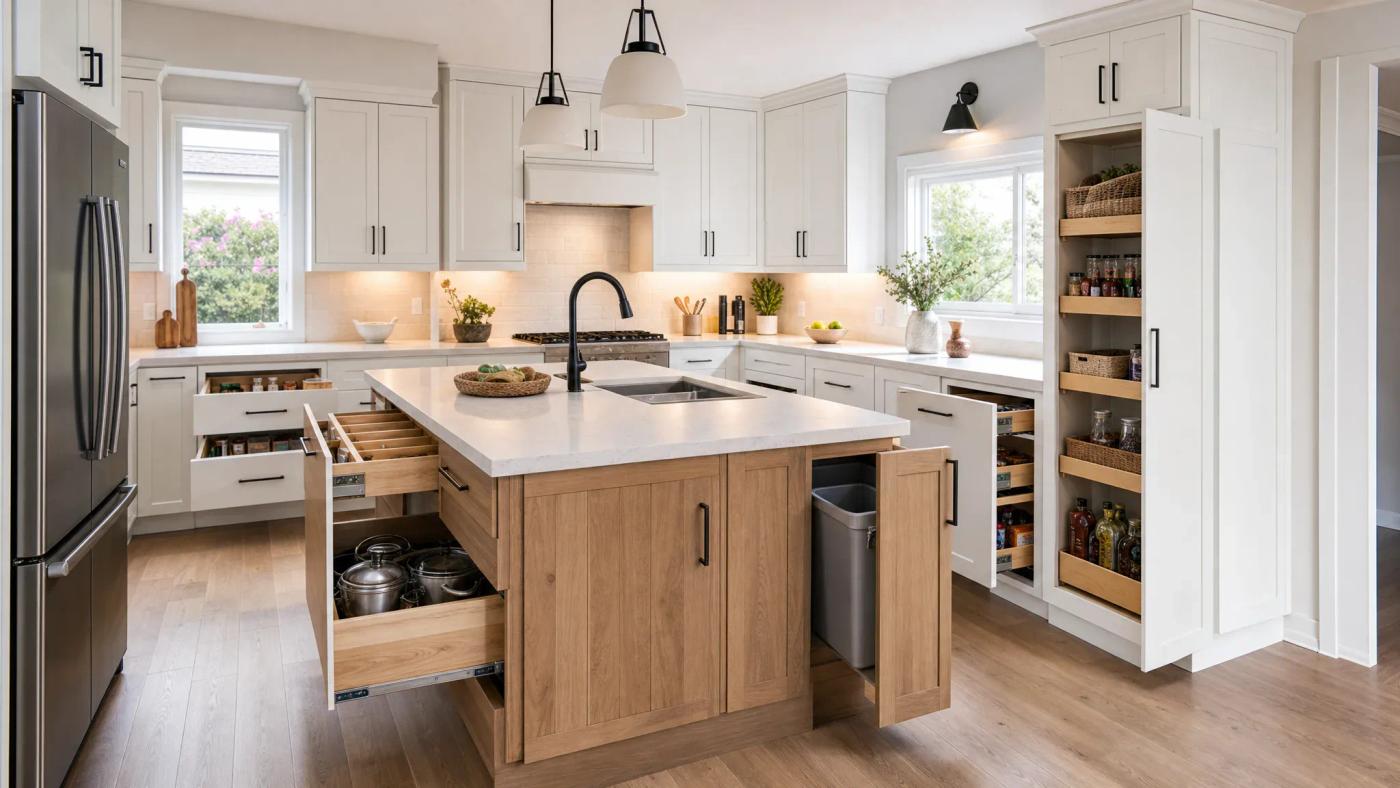
Why Can Refacing Approach Replacement Cost in a Full-Scope Remodel?
A low advertised refacing figure and a full replacement proposal may describe very different projects. The comparison becomes meaningful only after both quotes include the same number of doors and drawer fronts, finished panels, hardware, trim, countertop work, modifications, protection, disposal, and project management.
In TGA's typical full-scope remodels, homeowners are often changing more than the door style. They may also want taller upper cabinets, a different pantry, additional drawers, appliance panels, new island storage, revised fillers, or changes where the cabinets meet countertops and walls. Refacing labor, custom-sized doors, hinges, hardware, skins, modifications, and related trades can narrow the gap with new cabinetry. In that situation, TGA generally prefers to upgrade the cabinet boxes too.
That does not establish a universal price rule. A specialist may be able to reface a simple, sound, same-layout kitchen for materially less than replacement. Conversely, a complicated refacing scope can lose much of its price advantage. Ask bidders to price the same finished result.
| Cost or scope item | Refacing quote should state | Replacement quote should state |
|---|---|---|
| Doors and drawer fronts | Quantity, material, style, finish, edge profile, and sizing | Quantity, material, style, finish, edge profile, and cabinet-line specifications |
| Visible box surfaces | Face-frame treatment, end panels, fillers, toe kicks, and exposed undersides | Finished ends, decorative panels, fillers, toe kicks, moldings, and light rails |
| Hinges and drawer hardware | Reused or new; overlay changes; soft-close scope; repairs or boring | Brand or grade, soft-close scope, adjustability, and warranty |
| Cabinet modifications | Appliance, sink, microwave, trash, pantry, and island changes | New cabinet configuration and every specialty cabinet or accessory |
| Countertop and backsplash | Protection, removal, reinstallation, patching, and breakage responsibility | Template, fabrication, installation, sink cutout, support, and demolition scope |
| Related work | Plumbing, electrical, paint, flooring, wall repair, permits if applicable | Plumbing, electrical, paint, flooring, wall repair, permits if applicable |
| Project closeout | Cleanup, touch-ups, warranty, and excluded work | Cleanup, punch list, warranty, and excluded work |
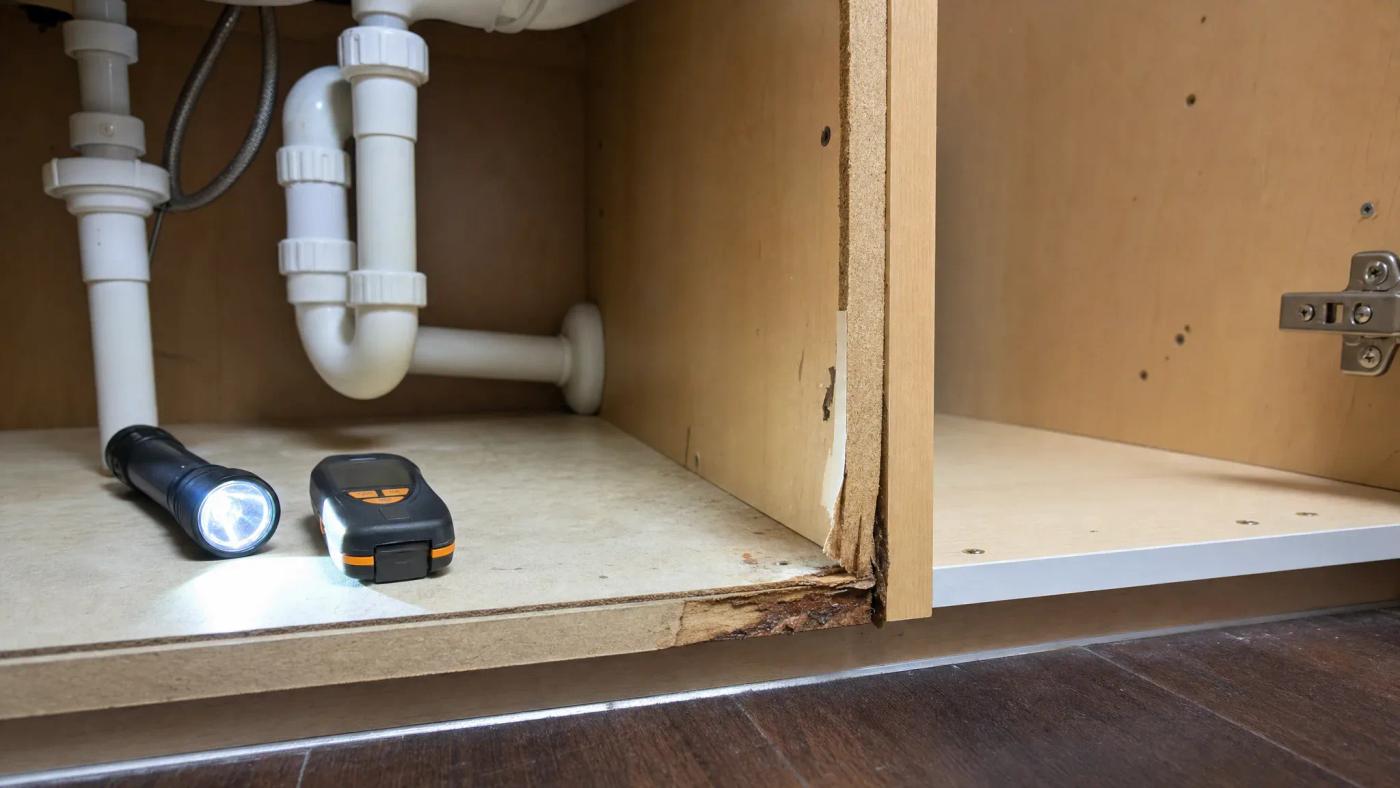
How Should You Evaluate the Existing Cabinet Boxes?
The central refacing question is not whether an old cabinet box is made from plywood, particleboard, MDF, or solid wood. It is whether the complete installed system is sound and suitable for the intended work. Material names alone do not reveal panel grade, thickness, density, joinery, edge treatment, fastener performance, installation quality, or past moisture exposure.
Use this inspection as a conversation guide, not as a substitute for an in-person evaluation:
| Check | What to look for | Why it matters |
|---|---|---|
| Water exposure | Swelling, softness, staining, delamination, corrosion, odor, or an active leak under sinks and near dishwashers | A new exterior does not repair a deteriorated substrate or stop a leak |
| Box alignment | Level cabinet runs, square openings, consistent reveals, and secure wall attachment | New doors make misalignment more visible and may not operate correctly |
| Joints and fasteners | Loose corners, separated backs, stripped hinge locations, and movement when loaded | Refacing relies on the retained box and its attachment points |
| Shelves and interiors | Sagging, worn coatings, inaccessible corners, damaged drawer boxes, and insufficient storage | Refacing usually leaves these functional limitations in place |
| Layout and clearances | Appliance-door conflicts, narrow aisles, poor landing space, blind corners, and unusable fillers | An exterior update cannot correct a layout problem |
| Future scope | Countertops, sink, flooring, backsplash, lighting, outlets, plumbing, or wall work planned soon | Related work can change the risk, sequencing, and total project cost |
Open every door and drawer. Look beneath the sink, beside the dishwasher, at wall-cabinet attachment points, and around appliance openings. Measure rather than assuming a refrigerator, range, dishwasher, or microwave replacement will fit. If the layout already frustrates you, refacing can make an inconvenient kitchen look newer without making it work better.
What Should You Look for in New Cabinet Quality?
Replacement gives you the opportunity to specify an entire new cabinet system, but a material label or marketing tier is not enough. Compare box construction, backs, shelves, drawer boxes, joinery, hinges, slides, finish, installation requirements, and written warranties.
The USDA Forest Service Wood Handbook explains that wood-based composites can use veneers, particles, fibers, and other elements, and that raw-material selection and manufacturing variables affect their properties. In practical terms, two products both called "plywood," "furniture board," or "MDF" can perform differently. Ask for the actual cabinet-line specifications.
| Item to verify | What the documentation can tell you | What it does not prove by itself |
|---|---|---|
| Box and component specifications | Panel type, thickness, back construction, shelf design, drawer construction, hinge/slide details, and finish | How well the cabinets will be designed for your room or installed on site |
| ANSI/KCMA A161.1 certification | The certified cabinet line passed performance tests covering structure, doors, drawers, and finish | That every cabinet from the brand is certified, or that one material type is always superior |
| TSCA Title VI compliance | Regulated hardwood plywood, MDF, and particleboard meet federal formaldehyde-emission requirements | Structural strength, finish durability, moisture resistance, or installation quality |
| Written product and labor warranties | Covered components, term, exclusions, and the party responsible for service | That excluded damage, misuse, leaks, or installation errors will be covered |
The Kitchen Cabinet Manufacturers Association says cabinet lines bearing its ANSI/KCMA A161.1 Quality Certification Seal undergo 14 tests covering structural strength, door and drawer operation, and finish durability. KCMA describes examples including a 600-pound wall-cabinet load test and 25,000 door-and-drawer cycles. The underlying standard evaluates factory-assembled cabinet performance; it does not prescribe one cabinet material or appearance. Certification is useful evidence, but it still does not replace good design and installation.
For products containing regulated composite wood, the US Environmental Protection Agency's TSCA Title VI guidance covers hardwood plywood, MDF, and particleboard. Finished goods containing those products must use compliant material and carry required labeling. Ask the supplier to identify the compliant product and documentation. TSCA Title VI is an emissions requirement, not a cabinet durability rating.
How Do Tampa Bay Home Conditions Affect the Decision?
Tampa Bay humidity alone does not mean existing cabinets must be replaced. The more important questions are whether cabinets have experienced liquid water, whether the home stays conditioned, and whether leaks or moisture sources have been corrected. Under-sink plumbing, dishwasher connections, refrigerator lines, exterior-wall penetrations, and past storm-related water intrusion deserve close inspection.
Older Tampa and St. Petersburg homes may also have site-built cabinets, multiple generations of repairs, uneven walls, nonstandard openings, or appliance spaces that no longer match current products. Those conditions do not automatically rule out refacing, but they can increase door-sizing, filler, trim, and modification work.
Condominium projects add a different set of constraints: building access, elevator reservations, work hours, debris routes, insurance requirements, and association approvals. Retaining boxes may reduce demolition, while replacement may solve long-standing storage and appliance problems. The correct answer depends on the building rules and the actual scope.
Surface-only cabinet work may not be the part of a project that drives permitting, but associated electrical, plumbing, ventilation, wall, or layout changes can. Requirements vary by jurisdiction and scope, so confirm them before work begins. Our guide to kitchen-remodel permits explains the broader questions to ask.
How Do You Compare Refacing and Replacement Quotes Fairly?
Start with one written desired outcome, then ask each bidder to identify what is included, excluded, reused, modified, and warranted. A quote that says "reface cabinets" or "replace cabinets" without component details is not ready for comparison.
Use these questions during each consultation:
- How many doors, drawer fronts, finished ends, fillers, toe kicks, and moldings are included?
- What material, finish, door construction, overlay, hinge, and drawer hardware are specified?
- Which existing components remain, and who is responsible if a retained component fails?
- Are cabinet interiors, shelves, drawer boxes, and slides being changed?
- How are appliance openings, sink bases, islands, panels, and ventilation handled?
- Will countertops or backsplash be removed, protected, patched, or replaced?
- Who handles plumbing, electrical, wall repair, flooring, painting, debris, and permits when required?
- What deposit, payment schedule, change-order process, product warranty, and labor warranty apply?
- What is expressly excluded?
Compare the final usable kitchen, not only the cabinet line. If one proposal leaves countertops, electrical work, wall repair, or appliance modifications for the homeowner to coordinate, add those costs and risks before comparing totals.
How Does TGA Approach Cabinet Projects in Tampa and St. Petersburg?
TGA provides cabinet design and replacement within full kitchen-remodel scopes; it does not sell cabinet refacing. Our process considers the cabinet boxes, storage plan, appliance specifications, countertop support, lighting, plumbing, electrical work, finishes, and installation sequence as one project.
For a typical TGA full-scope project, retaining old boxes while paying for new fronts, hardware, modifications, finish work, and related trades may leave too little difference to justify keeping the boxes. In those cases, we prefer to upgrade the whole cabinet system. We will not represent that conclusion as universal. A homeowner whose boxes and layout are sound and whose scope is limited should get a detailed proposal from a cabinet-refacing specialist before deciding.
If replacement fits your project, explore our Tampa kitchen remodeling service, St. Petersburg kitchen remodeling service, Tampa cabinet design and installation, or St. Petersburg kitchen cabinets. For style planning, see our guides to contemporary kitchen cabinet design and white oak kitchen cabinets.
Frequently Asked Questions
Does TGA offer cabinet refacing?
No. TGA Kitchens & Remodeling does not offer cabinet-refacing services. TGA designs and installs replacement cabinetry as part of full kitchen remodels in Tampa Bay. If your boxes and layout are sound and you want to keep them, obtain a written, scope-specific quote from a qualified refacing specialist and compare it with a replacement proposal.
Is cabinet refacing always cheaper than replacing cabinets?
No universal rule applies. A straightforward refacing project with sound boxes, a fixed layout, and few modifications may cost less. In TGA's typical full-scope projects, new doors, hardware, skins, trim, modifications, countertop coordination, and related work can cause the refacing price to approach replacement. Compare equivalent scopes and do not assume the same relationship holds for every kitchen.
Can cabinets be refaced without replacing the countertops?
Sometimes. It depends on the cabinet condition, refacing method, countertop material, edge details, sink, backsplash, and whether any boxes must be modified. The proposal should state how the countertop will be protected, whether it must be removed, who accepts breakage risk, and how gaps or changed panels will be finished.
Can water-damaged cabinets be refaced?
Refacing should not conceal active leaks or deteriorated boxes. Minor cosmetic staining is different from swelling, softness, delamination, failed joints, persistent odor, or suspected microbial growth. Correct the moisture source first and have the cabinet substrate evaluated. Replacement is usually the safer path when the box no longer provides a sound base.
How long does cabinet refacing last?
There is no responsible single lifespan. Service life depends on the retained boxes, surface preparation, veneer or finish system, door and hardware quality, installation, moisture exposure, daily use, and warranty. Ask the refacing specialist for product specifications, care instructions, comparable completed work, and written coverage.
Is plywood always better than furniture board or MDF for cabinets?
Not as a blanket rule. Plywood, particleboard or furniture board, and MDF are families of products with different grades and uses. Panel thickness, density, adhesives, edge treatment, joinery, hardware attachment, finish, cabinet design, and installation all affect performance. Compare the cabinet line's complete specifications and relevant certification instead of relying on one material word.
Should I reface, refinish, or replace cabinets before selling my home?
Choose the smallest scope that corrects the real problem and fits the home's condition. Refinishing may be enough when the finish is dated but doors and boxes are sound. Refacing may suit a functional same-layout kitchen that needs a new door style. Replacement makes more sense when damage, layout, storage, appliance fit, or related remodeling work must be addressed. No option guarantees a particular resale return.
Written by Tomer Amar, owner of TGA Kitchens & Remodeling and a Florida Certified Building Contractor (CBC1268077), serving Tampa Bay. This guide is general educational information. Product specifications, cabinet conditions, scopes, prices, and local requirements vary. TGA does not provide cabinet-refacing services.