
Black and White Bathroom Designs: Timeless Layouts, Materials, and Styling Tips
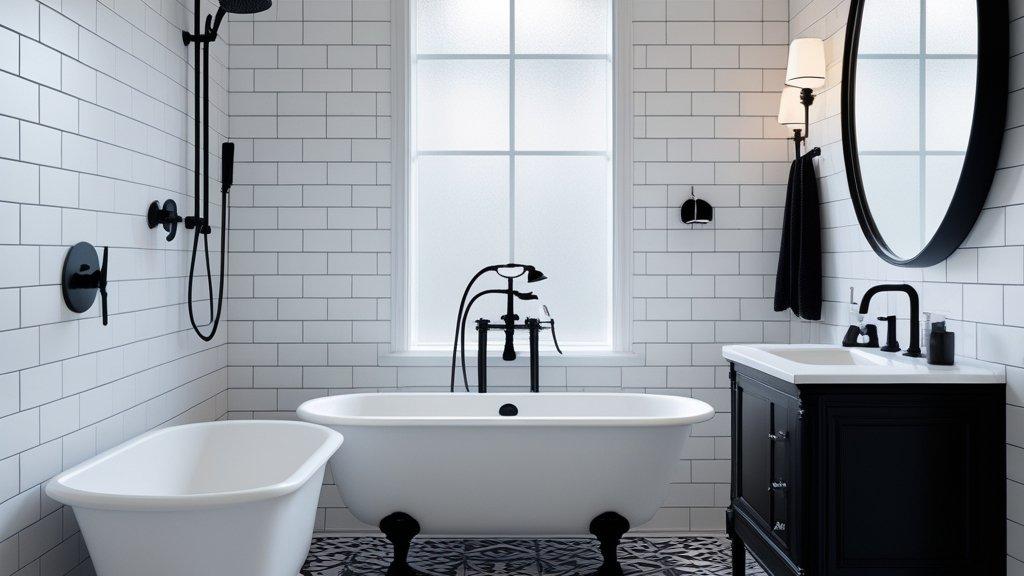
You can make a black-and-white bathroom that feels timeless, modern, or cozy without a lot of fuss. A simple palette of black and white gives you a clean base to mix patterns, textures, and finishes so the room looks polished and personal.
This post will walk you through core elements like tile, fixtures, and lighting, then show styling approaches from sleek modern to vintage charm. You’ll also find small accents and finishing touches that turn a high-contrast scheme into a space that suits your taste.
Core Elements of Black and White Bathroom Designs
You’ll focus on strong contrast, durable materials, and a simple, usable layout. These choices shape how the room looks, how it feels, and how well it performs day to day.
Color Palette Essentials
Pick a clear role for each color: use white for main surfaces and black for accents. White on walls, ceilings, and large tiles keeps the room bright. Save black for fixtures, trim, grout, or a single feature wall to create contrast without overwhelming the space.
Control the balance with a 70/30 or 80/20 rule: most surfaces white, most accents black. Use mid-tone grays only to soften transitions or when you need a shadowed area. Test paint and tile samples under your bathroom light before buying to avoid surprises.
Add one small color or material (wood, brass, or green from plants) to warm the palette. That single warmth prevents a sterile feel and ties the scheme to the rest of your home.
Material Choices
Choose materials for water resistance and maintenance. Porcelain or ceramic tiles work well on floors and showers because they handle moisture and clean easily. Matte tiles hide water marks; glossy tiles bounce light and look cleaner when dry.
For countertops and vanity tops, pick quartz or sealed natural stone to resist stains. Use powder-coated metals or stainless steel for faucets and handles so they don’t chip. If you include wood, seal it fully and place it away from direct splashes.
Mix textures to add depth: a smooth vanity, a textured shower tile, and a matte paint finish give visual interest while keeping the palette strict. Match grout color to your design goal, black grout hides grime; white grout makes lines disappear.
Fundamental Layout Principles
Place the wet zones (shower, tub) together to minimize plumbing runs and simplify waterproofing. Group the vanity and toilet on the same wall when possible to create an open flow.
Keep a clear circulation path of at least 30 inches in front of fixtures. This makes the space feel larger and keeps daily use easy. Position lighting around the mirror for even face illumination; avoid a single overhead light that casts shadows.
Use vertical lines, tall mirrors, stacked tile patterns, or a floor-to-ceiling accent, to make low ceilings feel higher. If the room is small, choose a floating vanity and wall-mounted fixtures to free floor space and maintain the black-and-white look without crowding.
Styling Approaches and Themes
Black and white schemes rely on contrast, texture, and scale. You can pick from sleek modern lines, timeless classic details, or a pared-back look that still makes a strong visual statement.
Contemporary Interpretations
Aim for clean lines and mixed finishes. Use large-format black floor tiles with white walls to make the room feel larger. Add matte black fixtures, tap handles, showerheads, and towel bars, for a cohesive, current look.
Introduce texture through subway tile laid vertically or a herringbone pattern on the floor to add movement. Keep vanities simple: floating cabinets in white or natural wood with black hardware work well. Lighting matters, install layered light: a slim LED mirror plus a pendant or recessed lighting to avoid harsh shadows.
Keep accessories minimal but intentional. Choose a single accent, like a black-framed glass shower screen or a patterned black-and-white rug, so the space reads modern without feeling cold.
Classic Aesthetic Trends
Lean on timeless elements: white subway tile, black hex or penny tiles, and chrome or polished brass fixtures. Contrast comes from traditional details, crown molding, wainscoting, or a freestanding tub with black claw feet.
Balance pattern and plain surfaces. Pair patterned black-and-white floor tile with plain white walls to prevent visual clutter. Add framed black-and-white photography or a statement mirror with a black or gold frame to bring warmth and personality.
For fittings, choose mixed metals sparingly, use one finish for taps and another for lighting to create subtle depth. Fabrics in natural tones, like linen or cotton, soften the palette and keep the classic feel inviting.
Minimalist Versus Bold Statements
Decide whether you want restraint or drama. For minimalist rooms, use uninterrupted planes: white walls, a single slab countertop, handleless cabinetry, and recessed storage to hide clutter. Let one material dominate, gloss white or matte black, for coherence.
For bold statements, layer patterns and finishes. Combine a black feature wall or tiled shower niche with white fixtures. Introduce contrast with a patterned tile floor or black geometric grout lines. Use a small table to display a plant, bold soap dispenser, or sculptural light to anchor the drama.
Consider scale when choosing bold elements. Large-scale black tiles create a moody backdrop, while small patterned tiles read busier. Match your choices to room size and to how much visual energy you want each day.
Design Accents and Finishing Touches
Use pattern and texture to anchor the room, choose lighting that balances brightness and mood, and pick fixtures that match the style and resist water and wear.
Tile Patterns and Textures
Mix large and small tiles to define areas. Use hexagonal or penny tiles on the floor for grip and visual interest, and subway tile on walls for a clean backdrop. Lay subway tiles in a herringbone or vertical stack to change the feel without adding color.
Vary grout color to make tile lines pop or blend. Light grout with white tile keeps the room bright. Dark grout with black tile hides dirt and creates contrast.
Add texture with matte and glossy finishes. Glossy tiles reflect light and make space feel larger. Matte tiles reduce glare and add a tactile quality. Use a textured accent strip or mosaic behind the sink or in the shower to draw the eye.
Lighting Strategies
Place layered lighting for function and mood. Start with bright, even overhead lighting, LED downlights work well for energy efficiency and wet locations.
Add task lighting at the mirror. Install wall-mounted sconces or vertical LED bars on either side of the mirror at about eye level to reduce shadows on your face. A dimmable vanity light lets you adjust for makeup, shaving, or relaxing.
Use accent lighting to highlight features. Strip LEDs under a floating vanity or niche illuminate textures and create depth. Warm white (2700-3000K) works well with black-and-white schemes to keep skin tones natural and the space inviting.
Fixtures and Hardware Selection
Match finish and style across fixtures for a cohesive look. Choose a single finish, matte black for modern contrast, polished chrome for a classic feel, or brushed brass for warmth against white tile.
Pick durable materials rated for bathrooms. Solid brass or stainless steel resists corrosion better than plated metals. Look for finishes with protective coatings to limit water marks and wear.
Consider scale and proportion. A wall-mounted faucet frees counter space and pairs nicely with a floating vanity. Choose a showerhead and tub spout size that balance the space; oversized fixtures suit large rooms, while compact models fit small baths.
Maintenance matters. Smooth, fewer-crease designs clean faster. Removable aerators and cartridge valves make repairs easier and extend the life of your fixtures.